The United States have been seeing an increase in energy costs over the years, across most all sectors. Between 2000 and 2008, energy costs have almost doubled for energy used in transportation and industry. Other sectors, such as commercial and residential energy usage, have also seen increases. (Source) As well, prices have been increasing for specific forms of fuels. From March 2011 to March 2012, crude oil futures increased in price by $4.94/bbl, while natural gas futures saw jump of $1.801/mmBtu over the same time period. (Source) These troublesome trends make it more difficult each year to provide energy to all who require it within the country.
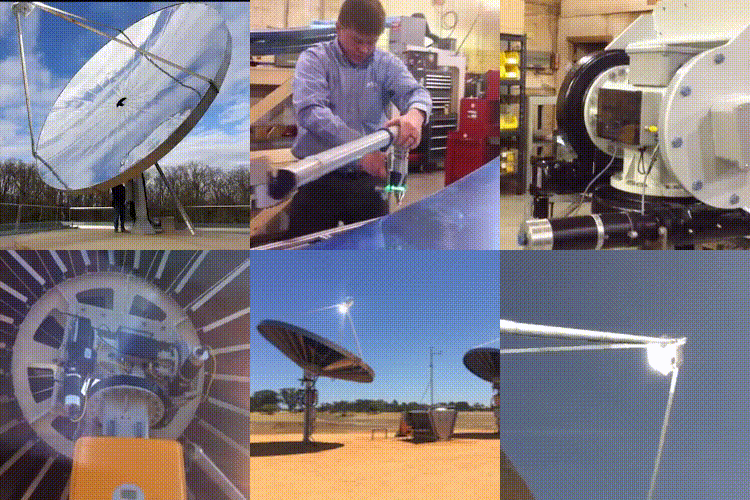
These pricing trends put free fuel in an attractive light. The most prevalent free fuel in the world is the sun. The sun provides power to the earth each day; the plants, animals and winds of the world all receive energy from the sun. Humans can quite easily harvest this energy for their own use once suitable infrastructure is in place. The SolarBeam Concentrator from Solartron Energy Systems is one such device. The SolarBeam is a solar hot water system and has been SRCC approved. The powerful and reliable concentrator has two-axis tracking capabilities, since it follows the sun automatically each day, it always operates at peak efficiency.
The dish is suitable for solar hot water applications from residential to commercial and industrial. It has been already installed for use in residential domestic hot water and space heating, as well as similar applications within the commercial realms. It is also capable of providing heat for industrial processes, such as textiles, brewing, bottling and chemical processing. Any system that uses heat as an input can use the SolarBeam for power. With rising energy costs in the USA, the SolarBeam’s payback is decreasing every year. Coupled with a variety of rebates available on both federal and state levels in the United States of America, the SolarBeam is an attractive option for energy production.
Below you will find a list of incentive and rebate programs available across the USA. This list may not be entirely comprehensive; there may be local programs available through various banks, mortgage services or municipalities. The federal tax rebates for solar hot water available offer a significant discount on the purchase and installation of such a system.
| Location | Solar hot water rebates |
| Federal | “Modified Accelerated Cost-Recovery System (MACRS)”-applicable for solar water heat, solar space heat, solar process heat (all can be done with SB). This program offers investment recovery through depreciation deductions. More information here.
“Residential Energy Conservation Subsidy Exclusion”- Subsidies provided for renewable energy and energy conservation measures are non-taxable under federal tax law. More information here.
“Business Energy Investment Tax Credit” – This is a great rebate for commercial and industrial installations of solar water heat, solar space heat or solar thermal process heat. The incentive is a 30% tax credit on expenditures, no limit. More information here.
“Energy Efficient Mortgages” – This residential program allows lenders to add up to 100% of energy efficiency improvements to an existing mortgage loan with certain restrictions. Amount is the lesser of 5% of property value, 115% of median area price of single family dwelling, or 150% of the Freddie Mac conforming loan limit. Specific information here.
“Residential Renewable Energy Tax Credit” – This tax credit is available for solar water heat in residential sectors. The program offers a 30% tax credit of system costs with no maximum. System must be certified by the SRCC and must heat at least 50% of dwellings hot water. Further information here. |
| Alabama | “Local Government Energy Loan Program” – applicable for solar water heating. Up to $350,000 per local gov’t or school campus, $500,000 per school system. 0% interest for 10 years, with a 3% management fee. Further information here. |
| Alaska | “Property Tax Exemption for Renewable Energy Systems”-residential renewable energy systems are exempt from taxation, includes SolarBeam. Further information here.
“Alaska Energy Authority – Renewable Energy Grant Program” – varies on a case by case basis, but the SolarBeam is eligible. Further information here.
“Power Project Loan Fund” – solar water and space heat are eligible for local gov’t, municipal utility and independent power producers. Amount varies and terms are tied to municipal bonds. Further information here.
|
| Arizona | “Non-Residential Solar & Wind Tax Credit” – SolarBeam is eligible as solar water heater, solar space heater and solar process heater. Rebate covers 10% of installed cost, up to $25,000 for one building, or $50,000 in total credits for a business. Further information here.
“Non-Residential Solar & Wind Tax Credit (Personal)” – commercial, industrial, non-profit, educational, governmental and agricultural installations can receive rebates amounting to 10% of installed cost of a solar system for a certain taxpayer. Further information here.
“Residential Solar and Wind Energy Systems Tax Credit” – Residential customers are eligible for a $1,000 rebate for solar systems such as the SolarBeam Concentrator. Further information here.
“Energy Equipment Property Tax Exemption”– For property tax purposes, solar systems such as the SolarBeam Concentrator, there is no increase in property value. This is eligible for commercial, industrial and residential customers. Further information here.
Location Specific: “City of Tucson – Permit Fee Credit for Solar Energy Systems” – Commercial and Residential customers can benefit from fee waiving from the Department of Planning and Development. Further information here. |
| Arkansas | n/a |
| California | “California Solar Initiative – Solar Water Heating Rebate Program” – for commercial, residential and multi-family residential buildings, SRCC certified solar equipment, such as the SolarBeam Concentrator, are eligible for $12.82 per estimate therm of natural gas displaced. Further information here.
“Property Tax Exclusion for Solar Energy Systems” – For solar systems such as the SolarBeam Concentrator, 100% of the systems value is excluded from property tax calculations, saving money for the owner in a commercial, industrial or residential application each year. Further information here.
Various locales within California also offer their own specific incentives for solar systems. These can be viewed here. |
| Colorado | “Property Tax Exemption for Renewable Energy Systems” – In Colorado, properties with solar water heat systems are eligible for tax credit depending on their individual city and county. Further information here.
“Direct Lending Revolving Loan Program” – The Colorado Governor’s Energy Office is providing loans for solar water heating and other technologies with a minimum loan of $10,000. Further information here.
|
| Connecticut | “New Generation Energy – Community Solar Lending Project” – For-profit and non-profit enterprises (schools, businesses, industries and agriculture, etc) are all eligible for loans of up to $100,000 for solar water heating technologies. These are low interest loans (0-5%) with terms from 1-10 years. More information here.
“Property Tax Exemption for Renewable Energy Systems” – Connecticut offers a 100% property tax exemption for increased value due to various renewable energy technologies, including solar hot water. Eligible installations include commercial, industrial, agricultural and residential. More information here.
“Energy Efficiency Fund – Residential New Construction Program” – New homes in Connecticut are eligible for a rebate on a variety of energy efficiency projects, including solar hot water. More information here.
|
| Delaware | “Sustainable Energy Utility (SEU) – Home Performance with Energy Star Loans” – This is a state loan program and solar water heating is eligible for loans within the residential sector. The loans range from $1,000 to 20,000 and the system is to be audited by a program-approved contractor. More information here.
“Green Energy Program Incentives” – Exact incentives vary by utility provider, but solar hot water is eligible for rebates in the commercial, industrial, residential, agricultural, schools and government institutions. Some utilities offer rebates based on kWh displaced or by installed cost of the system. View the following site for details. More information here. |
| Florida | “Miami-Dade County – Expedited Green Buildings Process” – Approved new commercial, industrial or residential projects with solar hot water are will be fast tracked through permit approval processes.” More information here.
“City of Fort Lauderdale – Smart Watts Rebate Program” – Residential solar hot water installations are eligible for a rebate up to $1,000. More information here.
Florida offers a variety of local rebates and loans for solar programs. These can be viewed here.
|
| Georgia | “Clean Energy Tax Credit (Corporate)”– SRCC approved solar thermal collectors such as the SolarBeam Concentrator are eligible for a tax rebate of up to 35% of the technology cost. More information here.
“Clean Energy Tax Credit (Personal)” – SRCC approved solar thermal collectors are eligible for a $2,500 maximum tax credit for residential customers. More information here.
“Green Communities Revolving Loan Program” – Businesses located within city limits of any city in Georgia are eligible to receive a low-interest loan for solar water heating. These loans vary from $10,000 to 250,000. More information here.
In addition to these incentives, Georgia also has a variety of utility rebate programs available for solar hot water, dependent on utility provider and location, viewable here.
|
| Hawaii | “Solar and Wind Energy Credit (Corporate)” – Solar thermal systems are eligible for up to 35% of the system cost in tax rebates. More information here.
“Priority Permit Processing for Green Buildings” – New buildings seeking to put use solar thermal enery measures in place are eligible for priority processing through permits. More information here.
“Solar and Wind Energy Credit (Personal)” – Commercial and residential installations of solar water and space heaters are eligible for a 35% tax credit on the actual cost of the system. More information here.
“Hawaii Energy – Solar Water Heater Rebate” – Customers of Hawaiian Electric Company (HECO) and its subsidiaries can receive a rebate for SRCC certified collectors. Residential customers will receive $750 and commercial customers receive $50 for each 5,000 Btu/hr of energy load the system displaces. More information here.
|
| Idaho | “Low Interest Energy Loan Programs” – Solar water heat and solar space heat systems can be eligible for a low interest loan (4% interest with 5-year term) to retrofit into a building. Exact money lent depends on the situation, but residential, commercial, agricultural, educational and medical facilities are all welcome to apply (Residential maximum $15,000, all others $100,000). More information here.
“Residential Alternative Energy Tax Deduction” – The state offers residential customers using solar water or space heat 40% of the system’s cost as income tax deduction (up to $5,000) for the first year, and 20% ($5,000 max) for each year for three years. For a system costing $20,000 or less the state of Idaho will cover the entire cost for residential customers over 4 years. More information here.
|
| Illinois | “Illinois Clean Energy Community Foundation Grants” – Non-profit instututions, schools and local government are eligible for grants for renewable energy projects through the Idaho Clean Energy Community Foundation (ICECF). Solar heat (water, space or process) systems are listed among eligible systems, monetary amount varies case by case. More information here.
“DCEO – Solar and Wind Energy Rebate Program” – Many sectors (commercial, industrial, residential, non-profit, educational and government) can apply for a rebate on solar thermal system costs. The maximum incentive is $30,000 up to a maximum of 30% of cost for residences and businesses or 50% for public sector and non-profits. Systems must SRCC approved and capable of producing at least 50,000 btu/day; two attributes of the SolarBeam Concentrator. (Open again July 2012) More information here.
“Ag Invest – Green Energy Loans” – Loans up to $10,000,000 are available for commercial, industrial, governmental, agricultural or non-profit institutions looking to add a renewable energy system, such as a solar heater, to their infrastructure. Loan seekers must check with banks to find a participating branch. More information here.
“Illinois Finance Authority Renewable Energy and Energy Efficiency Financing” – Non-residential facilities seeking to install solar heating systems could be issued tax-exempt bonds and credit enhancement for their projects. These institutions must demonstrate the public benefit of their projects for the people of Illinois. Monetary amount varies by project. More information here.
|
| Indiana | “Renewable Energy Property Tax Exemption” – Systems that generate energy with solar resources across all sectors are eligible for property tax exemption of 100% of the cost of the system. More information here. |
| Iowa | “Property Tax Exemption for Renewable Energy Systems” – Market value from a solar system added to a property (commercial, industrial, residential, agricultural) is exempt from property tax assessment by 100% for 5 years. More information here.
“Alternate Energy Revolving Loan Program” – This loan program is available for commercial, industrial, residential and utility facilities, and is funded by the state’s investor owned utilities. Projects of less than $50,000 are always up for application, while there are quarterly deadlines for more expensive projects. The loan is for 50% of financed project cost, and the terms are 0% interest for a maximum of 20 years. More information here.
“Iowa Building Energy Management Program” – Non-profit institutions are eligible for a loan (varying in terms and amount) for various solar heating projects. More information here.
|
| Kansas | n/a |
| Kentucky | “Renewable Energy Tax Credit (Corporate)” – OG-100 SRCC certified collectors such the SolarBeam Concentrator are eligible for a $1,000 rebate on the costs associated with it. Commercial, industrial and agricultural customers are all eligible. More information here.
“Renewable Energy Tax Credit (Personal)” – OG-100 SRCC certified collectors such the SolarBeam Concentrator are eligible for a $5,000 rebate on the costs associated with it. This is for residential customers, the tax credit goes to the owner. More information here.
|
| Louisiana | “Tax Credit for Solar and Wind Energy Systems on Residential Property”– This tax credit can be applied to personal, corporate or franchise taxes, but the main stipulation is the system must be installed on residential property. Solar thermal systems must be SRCC approved, like the SolarBeam. The tax credit is for 50% of the system cost (up to $12,500). More information here. There is also a personal tax creditversion of the above rebate. “Solar Energy System Exemption” – 100% of added value on residential properties from Solar Energy systems is exempt from property tax evaluations. More information here.
“Home Energy Loan Program” – The Louisiania Department of Natural Resources offers a 5-year loan for residential energy efficiency improvements, such as the SolarBeam Concentrator. They will subsidize up to $6,000 from a low interest loan, this is contingent on an energy audit. More information here.
“Entergy New Orleans – Residential Solar Water Heating Program” – This program is for customers of Entergy New Orleans and will pay up to $1000 for a residential solar hot water improvement. |
| Maine | “PACE Financing” – Residential and commercial solar water heat systems are eligible to receive a loan from the American Recovery and Reinvestment Act. The loan ranges from $6,500 to $15,000, and has a fixed 4.99% interest rate for up to 15 years. More information here.
“Efficiency Maine – Solar and Wind Energy Rebate Program” – Solar water heaters are eligible for a $1,000 rebate in both commercial and residential sectors. More information here.
|
| Maryland | “Maryland Public Service Commision – Solar Renewable Energy Certificates (SRECs)” – Installers of solar water heat across all major sectors could be eligible for SRECs from the Maryland Goverrnment, as long as they are using SRCC certified collectors. Exact rebate varies depending on the installation and situation. More information here.
“Sales and Use Tax Exemption for Renewable Energy Equipment” – Solar thermal equipment is 100% from tax in Maryland across all major sectors. More information here.
“State Agency Loan Program” – Branches of the Maryland State Government are eligible for a low interest loan for installation of solar water heaters. Loans range from $50,000 to $250,000. More information here.
“Clean Energy Grant Program” – The Maryland Energy Administration (MEA) offers grants for solar hot water systems in the commercial, industrial, non-profit and government sectors. For solar hot water, there is a maximum of a $1,000 rebate. More information here.
In addition to these general incentives and rebates, Maryland has a variety of programs available depending on location and utility provider. View here for details. |
| Massachusetts | “Excise Tax Deduction for Solar or Wind-Powered Systems” – More information here.
“New Generation Energy – Community Solar Lending Program” – Companies and non-profits in New England are eligible to receive a loan of up to $100,000 to install solar hot water systems. Interest rate varies depending on the loan, grants are also available for applicants. More information here.
“Residential Renewable Energy Income Tax Credit” – Massachusetts provides a 15% (up to $1,000) credit against the state income tax of a solar hot water system installed on an individual’s primary residence. More information here.
“Renewable Energy Property Tax Exemption” – Solar energy systems providing primary or auxiliary power in commercial, industrial, residential or agricultural applications are exempt from counting as taxable property for a 20-year period. More information here.
|
| Michigan | “PACE Financing – Local Option” – Solar water heat systems are eligible for a loan offered for installation. The loan amount and terms depends on the property assessment with the program. More information here.
“Alternative Energy Personal Property Tax Exemption” – 100% of the cost of alternative energy systems (such as Solar hot water) is removed from calculation of property values for tax purposes. More information here.
“Energy Revolving Loan Fund – Public Entities” – Local government sectors are eligible for a revolving loan, from $100,000 to $2,500,000 at 3% interest for 6 years. More information here.
“Michigan Saves – Home Energy Loan Program” – Residential customers seeking solar hot water are eligible for loans of up to $20,000 over a 12-120 month term and a maximum APR of 7%. More information here.
|
| Minnesota | “NEC Minnesota Energy Loan Program” – Residential installers of solar hot water systems could be eligible for a loan of up to $35,000 at 5.75% interest. More information here.
In addition to the loan above, there are a variety of small loans and incentives offered by utility companies in Minnesota. View the list here for more details. |
| Mississippi | “Energy Investment Loan Program” – The state of Mississippi offers a loan program with a 7 year repayment term, 3% below prime rate of interest for the commercial and industrial sectors to install solar water heaters and other technologies. The maximum loan is $300,000. More information here.
|
| Missouri | “Columbia Water and Light – Commercial and Residential Super Saver Loans” – Customers of this utility company in Missouri are eligible for loans ($30,000 for commercial and $15,000 for residential) with varying terms for solar water heaters. |
| Montana | “Residential Alternative Energy System Tax Credit” – This tax credit is applicable for solar hot water systems, and offers up to $1,000 per house-hold. More information here.
“Renewable Energy Systems Exemption” – For ten years, non-fossil fuel energy generation systems (i.e. Solar Hot Water) are exempt from property taxation in commercial, industrial, residential and other sectors. More information here.
“Alternative Energy Revolving Loan Program” – A loan of $40,000 for 10 years at 4.0% is available for a variety of sectors seeking to implement alternative energy systems. More information here.
|
| Nebraska | “Dollar and Energy Saving Loans” – Loans up to $14,000 are available for solar water heaters across various sectors in Nebraska. Interest rates vary from 2.5% to 5%. More information here.
|
| Nevada | “Portfolio Energy Credits” – This is a performance based initiative in Nevada, for specific information on solar hot water systems, view their site. More information here.
“Property Tax Abatement for Green Buildings” – Property tax for buildings implementing various green technologies, including solar hot water is reduced by various amounts according to this incentive. More information here.
Nevada also has a few rebate and incentive programs for customers of specific utilities, view these here.
|
| New Hampshire | “New Generation Energy – Community Solar Lending Program” – Any for profit or non-profit enterprise is eligible for loans on solar technology in New Hampshire. These loans range from $5,000 to $100,000 and rates vary from 0 to 5%. More information here.
“Local Option – Property Tax Exemption for Renewable Energy” – For residences with solar hot water systems, there are property tax exemptions available for the increased property value with the energy system. Amount varies case by case. More information here.
“Renewable Energy and Energy Efficiency Business Loan” – In the commercial sector, there is a loan available (minimum of $10,000) for various energy efficiency and production technologies (including solar hot water). More information here.
“NH PUC – Commercial and Industrial Solar Rebate Program” – The New Hampshire Public Utilities Commission offers rebates in sectors from commercial and industrial to governmental and agricultural. Solar water heat systems are eligible for a rebate of 25% off of the total cost. View the organization’s website for more details. More information here.
|
| New Jersey | “Assessment of Farmland Hosting Renewable Energy Sources” – Farms in New Jersey using solar hot water for various agricultural related purposes can receive a lower tax burden. More information here.
“Property Tax Exemption for Renewable Energy Systems” – 100% of added property value for commercial, residential and industrial installations of solar hot water is exempted from property tax values. More information here.
|
| New Mexico | “Sustainable Building Tax Credit” – This is a corporate or personal tax credit offered in New Mexico. Incentive amount is based off of LEED ratings for the building. Solar water heating can increase this rating and provide a rebate. More information here.
“Solar Market Development Tax Credit” – 10% of solar water heat purchase and installation costs (up to $9,000) can be provided for commercial, residential and agricultural customers as a tax credit. This tax credit may carry on for 10 taxable years before eligible is gone. More information here.
“Property Tax Exemption for Solar Systems” – In New Mexico, residential installations of solar hot water systems are not considered for property value calculated for taxation. More information here.
“Energy Efficiency and Renewable Energy Bond Program” – This program applies for schools and state governments applying energy efficient upgrades or renewable energy systems to their properties. Incentive is determined on a case by case basis. More information here.
|
| New York | “Personal Tax Credit” – Residential and multi-family residential homes installing solar hot water systems make their owner eligible for a personal tax credit. This tax credit is for 25% of system cost (up to $5,000) and may be carried forward for up to 5 years. More information here.
“Energy Conservation Improvements Property Tax Exemption” – 100% of value added in residential solar hot water installations is excluded from property tax calculations in New York. More information here.
“NYSERDA – Assisted Home Performance Grants” – Low income residences are eligible for assistance of 50% of solar hot water system costs (up to $5,000 for single family homes, $10,000 for building of multi-family homes). Remaining funds can be provided through various loans such as the one below. More information here.
“NYSERDA – Residential Loan Fund” – This program offers loans of up to $20,000 for 4.0% below lender rate for 10 years. For more information, visit the site below. More information here.
“New York Power Authority – Energy Services Programs for Public Entities” – Solar water heat in schools, governmental and institutional sectors can have its initial costs covered by the New York Power Authority for public entities they serve. More information here.
“NYSERDA – Solar Thermal Incentive Program” – This is a performance based incentive program for all general sectors. The program offers $1.50 per kWh displaced annually (up to 80% of initial heat load). For residences this is capped at $4,000, non residential sites can receive up to $25,000. More information here.
“NYSERDA – Green Residential Building Program” – This program applies for solar hot water in residences. It is based on LEED ratings and offers up to $3.75 per square foot in the home. More information here.
|
| North Carolina | “Renewable Energy Tax Credit (Corporate and Private)” – North Carolina offers energy tax credits for both corporate and private installations of solar hot water systems. The incentive is given as tax credits over 5 years, and amounts to 35% of system cost. Maximum incentive for businesses depends on whether the system is used for business purposes or not.Click here for more information on corporate or private rebates.
“Active Solar Heating and Cooling Systems” – Whether in a commercial, residential or industrial setting, solar heating and cooling systems cannot be evaluated at a cost more than their traditional counterparts. More information here.
“Energy Improvement Loan Program EILP” – This state loan program offers 1% interest rates for renewable energy systems such as Solar hot water, and can offer a maximum of $500,000 in a loan. More information here.
In addition to these programs, various local utilities in North Carolina offer rebate programs. View here for more details. |
| North Dakota | “Renewable Energy Tax Credit” – North Dakota offers a 15% tax rebate (3% for 5 years) on the cost of a solar hot water system. This is available for commercial, industrial and agricultural applications. More information here.
“Renewable Energy Property Tax Exemption” – North Dakota will not add the value from a solar water heater to property tax assessments. This excludes 100% of added value for 5 years. Applications available here. |
| Ohio | “Green Energy Ohio (GEO) Solar Thermal Rebate Program” – This Ohio non-profit group offers residential owners of solar hot water systems $30 per kBtu/day as long as the system is SRCC certified, like the SolarBeam Concentrator. More information here.
“Ohio Air Quality Development Authority Tax Incentive” – Businesses both small and large can make use of this incentive. The OAQDA offers a 100% exemption on tangible property for a renewable energy system that improves air quality. More information here.
Ohio’s energy utility companies also offer a variety of rebates depending on the location and company. These are viewable here.
|
| Oklahoma | “Community Energy Education Management Program” – This is a state loan program available for local governments to implement efficient renewable energy sources. Loan amounts vary (up to $150,000) and are charged at 3% interest for up to six years. More information here.
“Energy Loan for Schools” – The educational sector can benefit from this loan program. It will provide 100% of the costs for a renewable energy system, at 3% interest for six years. Each school district is eligible for $200,000. More information here.
|
| Oregon | “Residential Energy Tax Credit” – Residential installations of renewable energy systems are eligible for a tax credit of up to $1,500. More information here.
“Renewable Energy Systems Exemption” – Commercial, industrial and residential renewable energy systems are 100% exempt from increasing property value with regards to tax calculations. For more information, click here.
“Community Renewable Energy Feasibility Fund Program” – Oregon has this state grant program in place, offering a maximum of $50,000 incentive for commercial, non-profit, educational, governmental or institutional installations of solar hot water systems. More information here.
“GreenStreet Lending Program” – This lending program supports solar hot water installations in commercial and residential sectors. Terms of the loan vary, however maximum incentive is either $100,000 for residences or $50,000 for businesses. Further information here.
“Small Scale Energy Loan Program” – This loan program finances renewable energy installations across a variety of sectors in Oregon. More information here.
In addition to the programs listed above, there are a variety of local rebate and loan programs offered by various utility companies. These can be viewed here. |
| Pennsylvania | “DCED – High Performance Building Incentives Program” – This program is for commercial and residential sectors, and provides incentives (both loans and grants) for renewable energy projects in high performance buildings. More information here.
“High Performance Green Schools Planning Grants” – Schools seeking alternative energy in Pennsylvania can benefit from this grant program. Terms are determined on a case-by-case basis. More information here.
|
| Rhode Island | “Residential Renewable Energy Tax Credit (Corporate)” – This tax credit covers 25% of costs for a residential installation of a solar hot water system. View more information here.
“New Generation Energy – Community Solar Lending Program” – This non-profit organization offers low interest loans of up to $100,000 for solar water heat systems. More information here.
“RIEDC – Renewable Energy Fund Grants” – This state grant program is available across a variety of sectors and offers up to $750,000. More information is available here. |
| South Carolina | “Solar Energy and Hydropower Tax Credit” – This tax credit is available as a personal or corporate credit. The credit is for 25% of eligible costs of the system, solar hot water is eligible. More information here. |
| South Dakota | “Renewable Energy System Exemption” – Commercial, Industrial, Residential and Agricultural solar hot water systems are exempt from adding 70% of their costs (or $50,000, whichever is greater) for property tax calculations. More information is available here. |
| Tennessee | n/a |
| Texas | “Renewable Energy Systems Property Tax Exemption” – 100% of value added to property from a renewable energy system in Texas is exempt from tax calculations. More information here.
Utility companies in Texas offer a variety of rebates depending on service provider and location. View these here. |
| Utah | “Renewable Energy Tax Credit” – This tax credit is available for personal or corporate taxes. Tax credit varies by installation, more information here. |
| Vermont | “New Generation Energy – Community Solar Lending Program” – This non-profit organization offers low interest loans of up to $100,000 for solar water heat systems. More information here.
“Business Tax Credit for Solar” – This tax credit offers a 7.2% incentive on renewable energy property. More information is available here.
“Vermont Small-Scale Renewable Energy Incentive Program” – This incentive is available across a variety of sectors, and is applicable for solar hot water systems. Specific rates and terms vary depending on installation. More information here. |
| Virginia | “Property Tax Exemption for Solar” – This exemption is available across commercial, industrial and residential sectors. Exact terms vary, but renewable energy technology can be exempted from property tax calculations in Virginia. More information here.
|
| Washington | “Evergreen Sustainable Development Standard for Affordable Housing” – Low income residential construction is eligible for incentives if the solar hot water system applied can provide at least 50% of hot water needs in the home. More information is available here.
There are a variety of rebates and incentives from utility providers in this region. View more information here. |
| West Virginia | “Residential Solar Energy Tax Credit” – This incentive is valid for 30% of system costs (up to $2,000) in residential installations. More information available here. |
| Wisconsin | n/a |
| Wyoming | n/a |
Recent Comments